Weekly Report
Thursday 18 December 2025 |
Week of Wednesday 10 December to Tuesday 16 December 2025 |
Dear Client, Please find below our most recent Kenya Weekly Report. Please note that this is our final weekly report for 2025. Weekly reporting will resume from 05 January 2026. We wish all our clients a relaxing festive season and a Happy New Year! If you have any queries about our reports, please contact us at africaops@castorvali.com. |
Terrorism: During the reporting period, two terrorist incidents were recorded. One attack targeted a Chinese residence located near Elwak Police Station, Mandera County. Sources indicated that approximately ten Chinese nationals were present at the time. In a separate incident, an improvised explosive device (IED) detonated along the LAPSSET corridor in Bura East, targeting a vehicle carrying a local chief. The explosion missed its intended target, and no casualties were reported in either incident. - Despite enhanced security measures, al-Shabaab militants continue to demonstrate both the intent and capability to conduct small and large-scale attacks during the festive period. Northeastern counties - including Garissa, Mandera and Wajir - as well as the Boni Forest enclave in Lamu, remain at elevated risk. Potential targets include urban centres, places of worship, tourist sites, government offices, hotels, bars, nightclubs, beaches and other densely populated civilian areas, prompting heightened security postures around key public and commercial locations during the holiday season.
Crime: The Ministry of Interior has issued a festive season security advisory highlighting elevated risks of crime, intercommunal violence, and traffic-related incidents. Historical data indicate that petty crimes, drug peddling, substance abuse, home burglaries, traffic violations, cybercrime, and noise disturbances typically increase during this period. Intercommunal tensions, particularly livestock theft and disputes, are also heightened, a situation likely to be exacerbated by the anticipated December 2025–March 2026 drought. - In response to the Ministry of Interior’s festive season security advisory, nationwide measures have been activated to prevent and respond to criminal, terrorism-related, and intercommunal threats. These include the activation of the National Multi-Agency Command Centre (NMACC) and regional and county coordination centres to oversee intelligence sharing, surveillance, and rapid response operations. Additional police deployments, enhanced air and ground surveillance, and targeted traffic management operations on major highways have been implemented, alongside crackdowns on illicit substances and organised criminal gangs. The Ministry of Defence supports these efforts by providing logistical and air assistance, while mobile courts and electronic enforcement tools are employed to strengthen public safety and maintain order. While these measures aim to lower risk levels, personal safety cannot be guaranteed. Individuals are advised to maintain high levels of awareness and vigilance throughout the festive period and to strictly adhere to traffic regulations.
Socio-economic Developments: Several counties in Kenya are currently experiencing drought, with conditions expected to worsen in the short term. According to government reports, the Arid and Semi-Arid Lands (ASAL) are the worst affected, triggering severe food insecurity. At least 23 counties have been mapped: thirteen are classified in the ‘Normal’ drought phase, nine in the ‘Alert’ phase, and one in the ‘Alarm’ phase. In response, the government estimates that approximately KES 13 billion (USD 100 million) will be required to support over two million people at risk of drought-related challenges across the country. - The drought is also increasing security and health risks, as livestock congregate at remaining water points, spreading disease and triggering competition over scarce resources. Women and children are likely to travel further to fetch water, raising risks of gender-based violence, while population displacements may rise, and declining milk production further exacerbates child malnutrition.
|
Castor Vali maintains its advice to clients to avoid all non-essential travel to counties bordering Somalia – including Mandera, Wajir, Garissa, and Lamu - due to the risk of terrorist attacks. If travel to these areas is essential, clients should consider using police escorts and consult with local authorities ahead of traveling. Travel by air would mitigate the risk of attacks on main roads, although more measures will need to be implemented, considering an existing security alert issued by the National Police Service (NPS) that al-Shabaab has the intent and capability to target aircraft. Organisations with operations in these areas are advised to carefully review their security procedures to protect employees, particularly non-local Kenyans and foreigners. The risk of kidnapping also remains elevated in all areas within 60 km of the Kenya-Somalia border. |
* Significant incidents include terrorism incidents, security operations, and other incidents involving a fatality. |
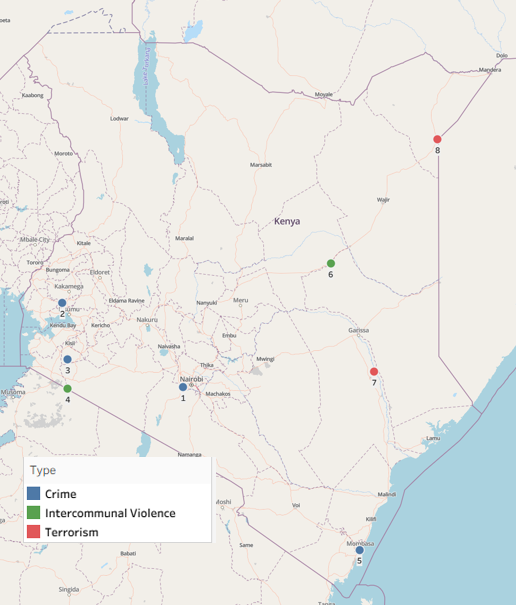
- Kajiado: On Thursday 11 December, a man was fatally stabbed during an altercation with his neighbour in the Gichagi area of Ngong Town. The motive for the confrontation remains unclear.
- Vihiga: On Thursday 11 December, a suspected robber was stoned to death by members of the public in Emuhaya, following allegations that he had stolen from a local shop.
- Kisii: On Friday 12 December, a police officer fatally shot a resident during a confrontation at a bar in Kenyenya. The motive of the confrontation remains unknown.
- Narok: On Saturday 13 December, two youths were confirmed dead and five others injured during violent clashes between the Kipsigis and Maasai along the Angata Barikoi–Lolgororian border. More than 30 houses were set ablaze. The violence was reportedly driven by cross-border livestock theft.
- Mombasa: On Monday 15 December, police officers in Likoni shot two suspected robbers during a security operation targeting criminal hideouts. The operation resulted in the recovery of stolen motorcycles, several mobile phones, and crude weapons.
- Isiolo: On Monday 15 December, several people were reportedly killed during intercommunal clashes in Madho Qarsa, Chari Ward.
- Garissa: On Monday 15 December, an improvised explosive device (IED) detonated along the LAPSSET corridor in Bura East, targeting a vehicle carrying a local chief/security administrator. The explosion missed the intended target, and no casualties were reported.
- Mandera: At approximately 0115hrs on Tuesday 16 December, suspected al-Shabaab militants attacked a Chinese residence near Elwak Police Station. The attackers, reportedly using four vehicles, were repelled by police following an exchange of fire that lasted for almost an hour. No casualties were reported.
|
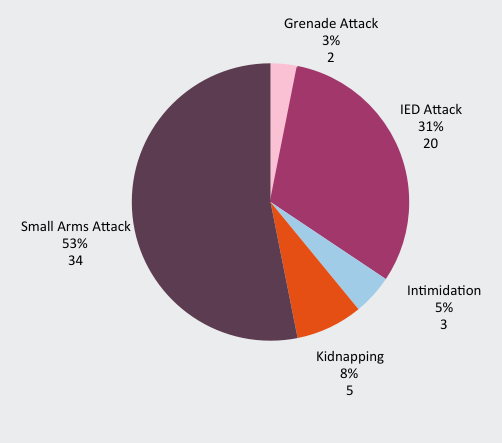
Terrorism statistics by attack mode - the last 12 months |
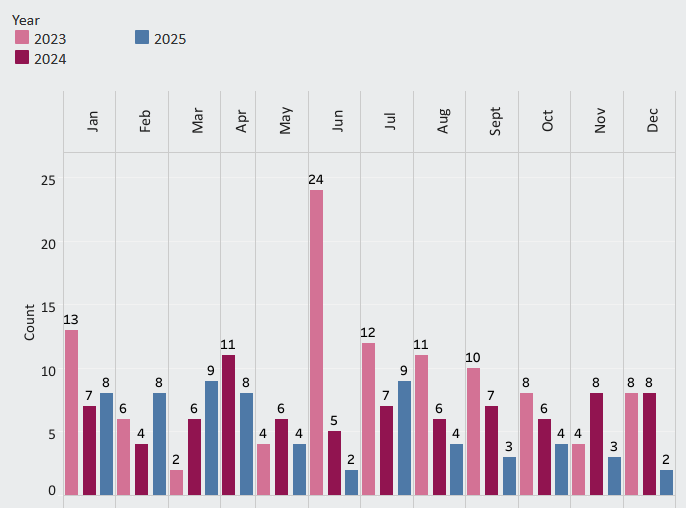
Terrorism incidents by month: 2023 to date |
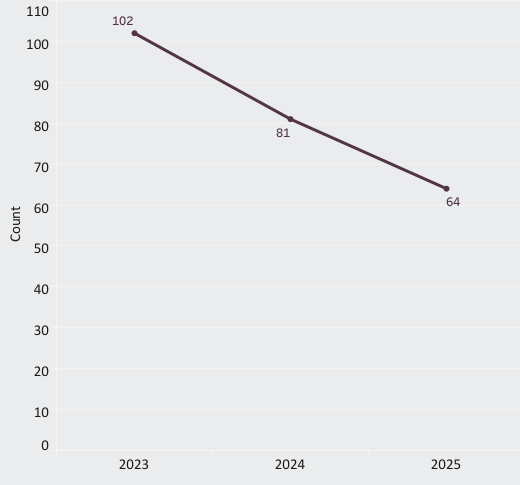
The cumulative terrorism attack trend: January 2023 to date |
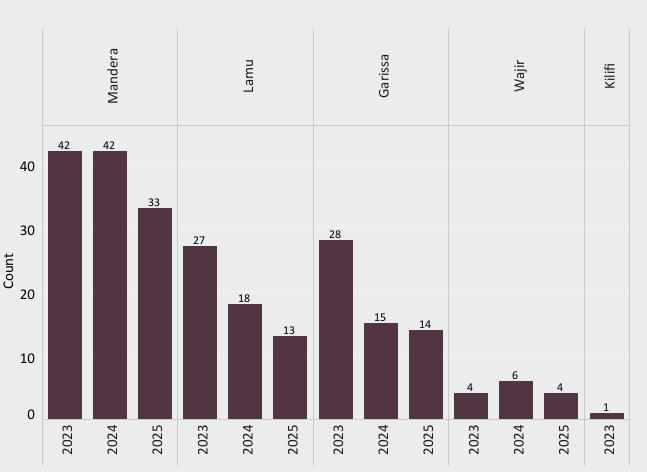
Terrorism statistics by county: January 2023 to date |
Note: Incident reported in Kilifi was bomb scare not an attack. |
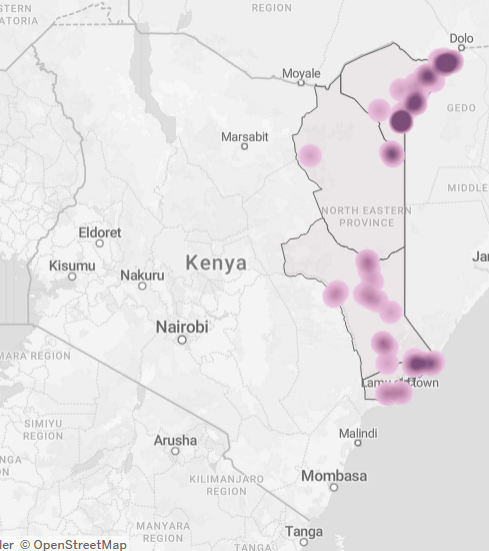
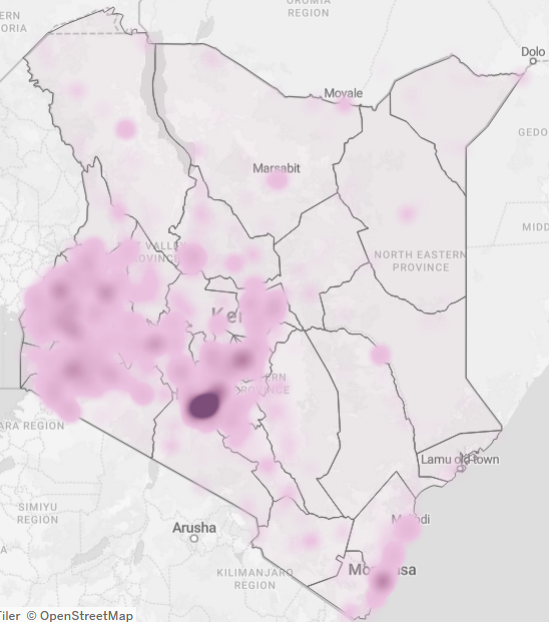
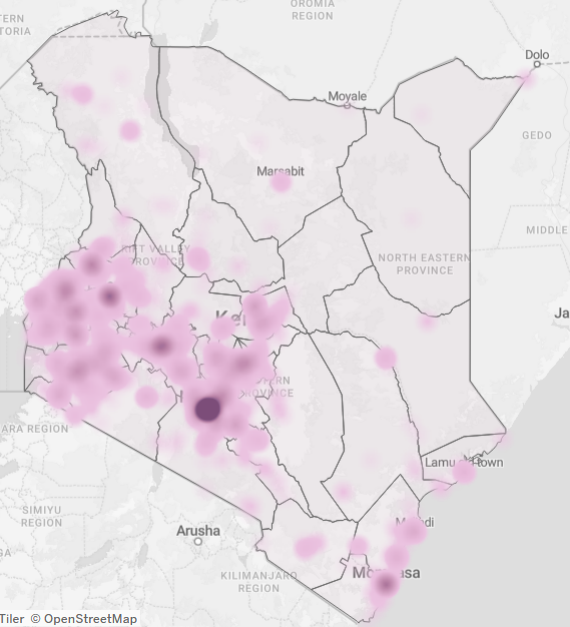
Terrorism heat map - the last 12 months |
Data Sources for all the visuals: CVA and ACLED |
During the reporting period, two terrorist incidents were recorded. One attack targeted a Chinese residence located near Elwak Police Station, Mandera County. Sources indicated that approximately ten Chinese nationals were present at the time. The gunmen, estimated to be about 20 individuals operating in four vehicles, were repelled by police following an exchange of fire that reportedly lasted nearly an hour. Police sources indicated that the attackers’ objective was to kill foreign road construction workers and local Kenyans and to disrupt ongoing road construction projects in the region. The area is situated close to the Kenya–Somalia border, a corridor frequently exploited by militants to infiltrate Kenya and launch attacks against critical infrastructure and security personnel. In a separate incident, an improvised explosive device (IED) detonated along the LAPSSET corridor in Bura East, targeting a vehicle carrying a local chief. The explosion missed its intended target, and no casualties were reported in either incident. In response to these incidents, and amid heightened terrorism risks along the Somalia border during the festive season, additional specialised police and military units have been deployed to reinforce border security. Despite these enhanced security measures, al-Shabaab militants continue to demonstrate both the intent and capability to conduct small and large-scale attacks during the festive period. Northeastern counties - including Garissa, Mandera and Wajir - as well as the Boni Forest enclave in Lamu, remain at elevated risk. Potential targets include urban centres, places of worship, tourist sites, government offices, hotels, bars, nightclubs, beaches and other densely populated civilian areas, prompting heightened security postures around key public and commercial locations during the holiday season. |
Crime and Intercommunal Violence |
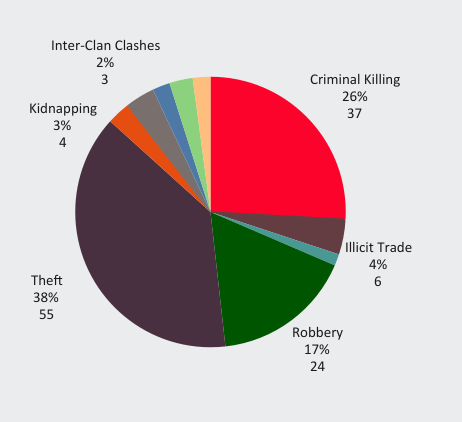
Crime and intercommunal violence events during the review period |
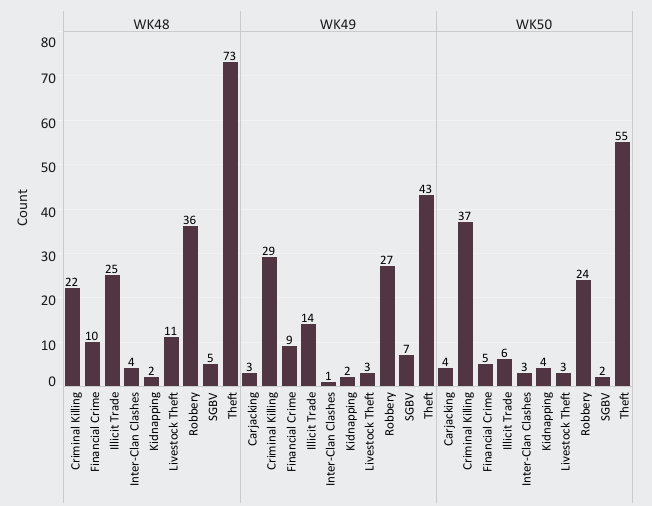
Crime statistics over the past three-week period |
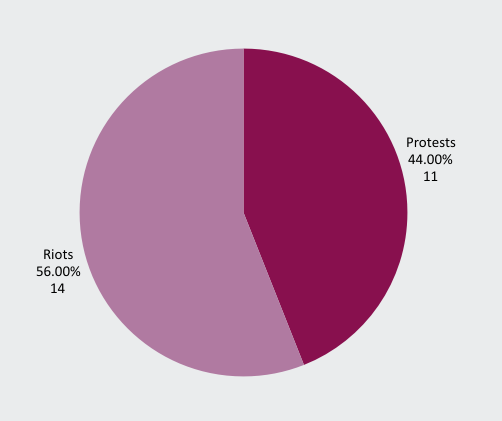
Civil unrest statistics during the review period |
Crime and intercommunal violence - Jan 2025 to Date |
Civil disorder and political unrest - Jan 2025 to date |
Data sources for all the visuals: CVA and ACLED |
There was no significant change in the overall number of reported crimes, civil unrest incidents and intercommunal violence cases during the review period compared with the previous cycle. However, a mixed trend was observed, with declines in civil disorder, illicit trade and sexual and gender-based violence (SGBV), alongside increases in theft-related offences and criminal killings.
Key trends observed during the review period included:
- Decline in civil disorder: Reported civil unrest incidents fell by 32% compared with the previous review period. The reduction is largely attributed to the onset of the festive season, during which most organisations, including trade unions and human-rights groups, tend to scale down activities ahead of the December break.
- Increase in criminal killings: Criminal killings increased by 27% compared with the previous period. Most cases were linked to mob justice targeting suspected offenders, as well as fatal domestic disputes. With crime levels typically rising during the festive season, the risk of mob retaliation and vigilante violence is also likely to remain elevated.
- Increase in robberies and thefts: Robbery and theft incidents rose by 12% compared with the previous reporting period, driven primarily by an increase in theft cases. Business premises and residential properties remained the main targets, accounting for 75% of reported incidents. Ahead of the Christmas and New Year period, police have issued advisories warning of a heightened risk of crime, accompanied by the rollout of additional security measures (see section below for details).
- Increase in intercommunal violence and livestock-related theft: Incidents of intercommunal violence and livestock theft increased from four in the previous period to six during the review period. Notably, clan-related violence was reported in Narok County between the Kipsigis and the Maasai over the disputed Angata Barikoi–Lolgororian boundary, resulting in at least seven fatalities.
|
National – Ministry of Interior issues festive season security advisory |
On Wednesday 17 December, the Ministry of Interior issued a security advisory highlighting heightened risks during the festive season. The advisory noted increased threats related to crime, intercommunal violence, and traffic-related offences.
While the advisory did not detail the specific threats, historical data from Castor Vali indicate the following risks were typically elevated during previous festive periods:
- Spike in petty crime: Petty crimes such as pickpocketing and street muggings tend to rise, particularly in crowded locations such as shopping malls, markets, public transport hubs, beaches, and social events. Opportunistic criminals exploit these environments to target unsuspecting individuals.
- Increase in drug peddling and substance abuse: Festive social events often see higher incidences of drug peddling and substance abuse, especially among youth and minors. These activities increase vulnerability to other crimes, including muggings, armed robberies, gender-based violence, and molestation, particularly in nightlife settings.
- High rate of home burglaries: Many homes are left unattended as residents travel to social gatherings, rural areas, or church services during Christmas and New Year’s, leading to a rise in burglaries.
- High rate of vehicle break-ins: Vehicle break-ins are usually high during this period, targeting unattended vehicles in insecure areas, near event venues, or along roadsides. Families travelling upcountry may also face similar incidents in rural areas.
- Surge in traffic violations and road accidents: Increased movement from urban to rural areas leads to heavy traffic, road congestion, and a higher incidence of accidents caused by factors such as human error, drink-driving, speeding, and overloading.
- Cybercrime and counterfeit goods: With higher cash flow during the holidays, cybercrime cases rise, alongside the circulation of counterfeit products, particularly alcoholic beverages. Fake promotions and fraudulent social media links also become more prevalent.
- Noise violations: Loud celebrations and church services in residential neighbourhoods may cause public disturbances, which can create opportunities for criminal activity.
- Intercommunal violence: Cross-border livestock theft and disputes tend to rise due to increased demand for livestock for consumption, sale, and dowry obligations. The anticipated December 2025–March 2026 drought may further drive pastoralist communities to migrate in search of pasture and water, escalating competition, disputes, and ranch intrusions, particularly in Laikipia and Samburu.
Countermeasures In response to the Ministry of Interior’s security advisory, several measures have been activated nationwide to deter and disrupt criminal, terrorism-related, and intercommunal activities. Key interventions include: - Multi-agency coordination: The National Multi-Agency Command Centre (NMACC) has been activated to oversee surveillance, intelligence sharing, and rapid response operations before, during, and after the festive season. The centre comprises officers from the Kenya Defence Forces, National Police Service, National Intelligence Service, Kenya Prisons Service, Kenya Wildlife Service, Kenya Forestry Service, National Youth Service, and National Government Administration. Similar coordination centres have been established at regional and county levels to strengthen command and control.
- Enhanced police deployment: Additional officers from various departments have been deployed to identified hotspots and key installations, with all officers previously on leave recalled. Critical sites include airports, border crossings, high-traffic public areas, hotels, shopping malls, beaches, tourist sites, central business districts, places of worship, entertainment venues, and essential infrastructure.
- Enhanced air and ground surveillance: Specialised police units, supported by the Ministry of Defence, are providing logistical and air support as needed, including guarding against external threats.
- Traffic management: The National Transport and Safety Authority (NTSA), together with the Traffic Police and other agencies, has launched a nationwide operation targeting major highways and urban roads. The initiative includes multi-agency coordination, increased visibility in high-risk corridors, mobile courts deployment, and both physical and electronic enforcement measures.
- Alternative travel routes: Travellers from Nairobi to Western and Nyanza regions are advised to use the Nairobi–Suswa–Narok route instead of the Mai Mahiu escarpment, while those travelling through Central Kenya may consider the Nairobi–Nyeri–Nyahururu–Nakuru route for safer and smoother transit.
- Operations against illicit substances: Nationwide crackdowns on the production, sale, and consumption of illicit brews and drugs are being led by the National Authority for the Campaign Against Alcohol and Drug Abuse.
- Crackdown on criminal gangs: The NMACC has intensified operations against organised criminal gangs in Nairobi, the Coast, Western, Nyanza, Central, and Eastern regions, alongside escalated enforcement against cultural and social crimes.
Assessment A significant rise in fatal road traffic accidents (RTAs) is highly likely during the festive season, coinciding with increased traffic on major highways as people travel to reunite with family, attend social and church events, or visit popular tourist destinations. The National Transport and Safety Authority (NTSA) attributes this surge to factors such as drink-driving, driver fatigue, poor visibility, high traffic volumes, and unsafe pedestrian crossings. From January to mid-November, 4,195 deaths have been reported, rising further to over 4,400 by December in some reports.
The risk of armed robberies, muggings, and petty crimes remains elevated, particularly during social gatherings. With many residents and employees leaving major cities for extended holidays, an increase in break-ins, home invasions, and theft targeting vacant residential and commercial properties is anticipated. Data from the Castor Vali database shows that incidents of robbery and theft have risen nationwide over the past two months, with theft consistently being the most reported crime. This upward trend, which began in mid-October, has continued into December and mirrors a similar pattern observed last year.
Major highways prone to RTAs and traffic disruptions include the Nairobi–Nakuru–Kisumu/Kericho Road, Nairobi–Thika–Meru/Embu Road, Nairobi–Garissa Road, Nairobi–Mombasa Road, and Nairobi–Narok–Kisii Road. Patrols have been intensified in major towns, with both uniformed and plainclothes officers deployed to hotspots and popular social venues. Enhanced security is also reported at border points and intercommunal hotspot counties, including regions in the North Rift Valley, Eastern, Northeastern, and Northern Kenya, as well as along the Kisumu–Kericho border.
The NMACC approach, successfully executed during last year’s festive season, will operate alongside the police command centre at Jogoo House in Nairobi’s CBD, supported by Regional (RMACC) and County (CMACC) command centres. While the number of officers attached to NMACC this year is not confirmed, it is expected to exceed the 10,300 officers deployed in 2024. The military has also been integrated into the security strategy, tasked with securing border counties, providing logistical and air support, and assisting the Regional and County Security Committees and other agencies in responding to critical emergencies.
While these measures aim to lower risk levels, personal safety cannot be guaranteed. Individuals are advised to maintain high levels of awareness and vigilance throughout the festive period and to strictly adhere to traffic regulations.
|
Socio-economic Developments |
National – Most parts of the country are facing worsening drought |
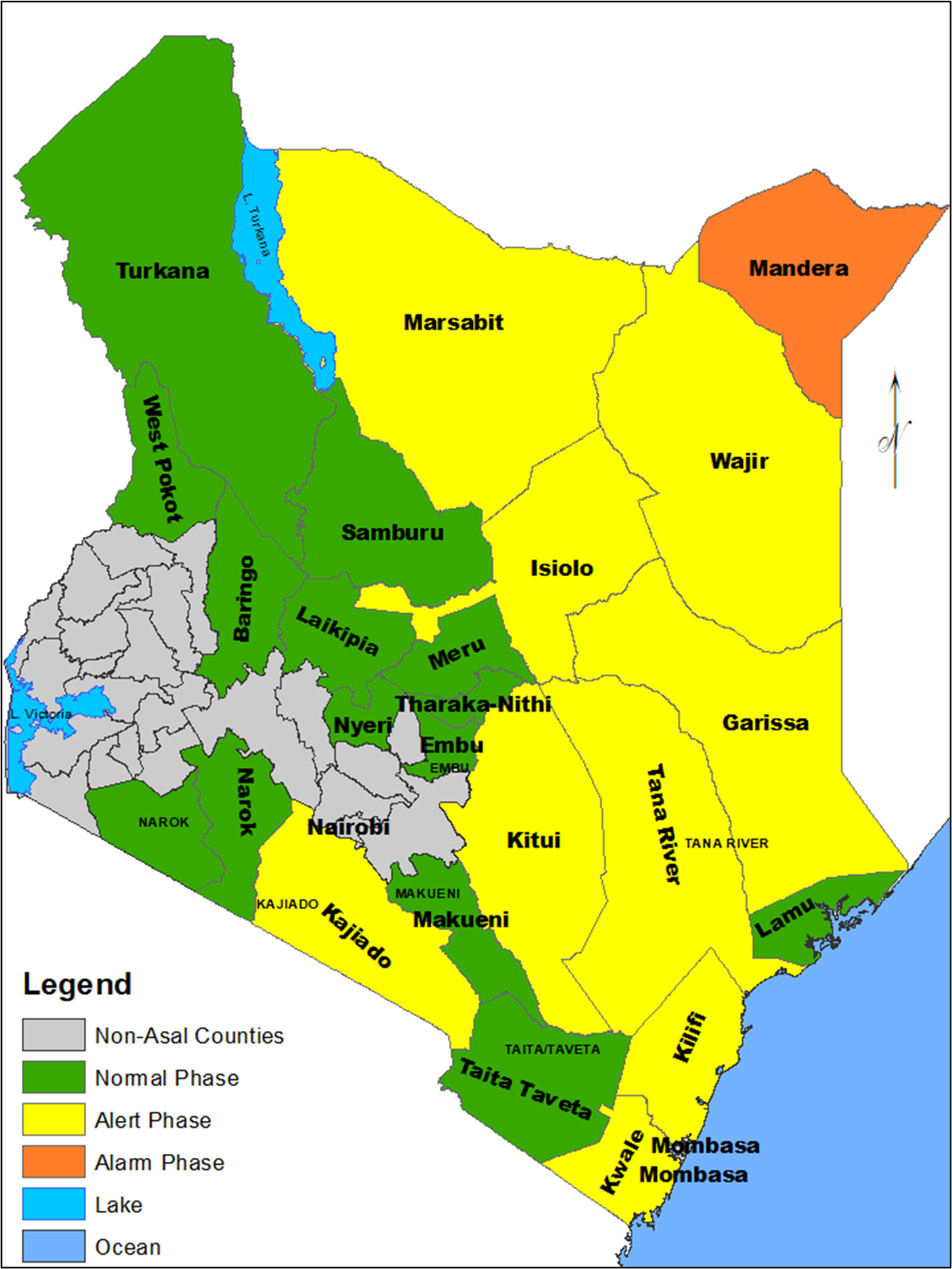
Several counties in Kenya are currently experiencing drought, with conditions expected to worsen in the short term. According to government reports, the Arid and Semi-Arid Lands (ASAL) are the worst affected, triggering severe food insecurity. At least 23 counties have been mapped: thirteen are classified in the ‘Normal’ drought phase, nine in the ‘Alert’ phase, and one in the ‘Alarm’ phase.
In response, the government estimates that approximately KES 13 billion (USD 100 million) will be required to support over two million people at risk of drought-related challenges across 32 counties. Of this, KES 7 billion (USD 54 million) is needed over the next three months to provide food, water, and medicine for affected populations, while KES 6 billion (USD 46 million) will cover livestock support, including food, water, and an animal off-take programme over six months. This information was disclosed on 16 December by Deputy President Prof. Kithure Kindiki during a briefing with development partners, humanitarian organisations, and the private sector. He appealed for urgent support, including food, water, and medical supplies, to avert loss of life and livestock.
As part of immediate response efforts, the national government and counties, supported by the World Bank, are implementing the Food Systems Resilience Program (FSRP) in 13 severely affected counties, while the National Agricultural Value Chain Development Project (NAVCDP) covers the remaining 34 counties nationwide. These initiatives aim to combine urgent drought response with longer-term agricultural value chain development. Counties facing acute drought are receiving immediate support, including transportation of fodder, water delivery to pastoral areas, and interventions to protect livestock and households dependent on them. Some planned activities under these programmes have been temporarily paused, with funds reallocated to urgent drought mitigation needs.
Assessment
The Kenya Meteorological Department (KMD) has warned that no significant rainfall is expected until March 2026. Forecasts by the IGAD Climate Prediction & Applications Centre (ICPAC) and other agencies indicate that the October–December 2025 season has delivered extremely poor rains across the eastern Horn of Africa. In Kenya, the National Drought Management Authority (NDMA) reports prolonged dry spells in Garissa, Wajir, Mandera, Tana River, and Kitui, with communities increasingly relying on emergency water trucking. Crop water availability in central and eastern Kenya is very low due to delayed or absent rainfall, threatening crop failure or reduced yields. The drought situation is worsening as the short rains underperform.
Based on the NDMA’s November 2025 classifications, counties are categorised as follows:
- Normal Phase: Samburu, Turkana, Taita Taveta, West Pokot, Tharaka Nithi, Embu, Nyeri, Laikipia, Narok, Baringo, Makueni, Meru, and Lamu, where major livelihood zones are experiencing stress, particularly in the water and livestock sectors.
- Alert Phase: Wajir, Garissa, Kilifi, Kitui, Marsabit, Kwale, Kajiado, Isiolo, and Tana River, which require close monitoring due to emerging drought conditions affecting food security, water access, and pasture availability.
- Alarm Phase: Mandera County, which requires urgent intervention.
|
Drought Phase classifications as of November 2025 (National Drought Management Authority) |
Across the region, the October–December 2025 rainy season has essentially failed in Somalia, eastern Kenya, and southern Ethiopia. Recovery through late-season rains in December is now impossible, marking the second or third consecutive poor season in many areas. Crop and pastoral conditions remain poor: Kenya faces crop failure or very low yields, southern Ethiopia’s livestock-based livelihoods are negatively affected, and in Somalia, over 185,000 people have been displaced, prompting a drought emergency declaration on 10 November 2025.
Food insecurity is expected to worsen in early 2026 during the pastoral lean season (February–March) and agropastoral lean season (April–June), with households facing poor harvests, depleted food stocks, reduced milk production, livestock deaths, and rising acute malnutrition among children.
The drought is also increasing security and health risks, as livestock congregate at remaining water points, spreading disease and triggering competition over scarce resources. Women and children are likely to travel further to fetch water, raising risks of gender-based violence, while population displacements may rise, and declining milk production further exacerbates child malnutrition.
|
| Date | Event | Advisory | | Friday 19 December–Monday 29 December | Temporary traffic disruption expected on Tana River Bridge and approach roads, Ukasi-Garissa-Modika (A3) Road due to roadwork | There is a high likelihood of traffic disruptions over the reported period (See the Advice Note for more details) | | Thursday 25 December | Christmas Day, countrywide | Elevated risk of petty crime and traffic disruption around the event location. | | Friday 26 December | Boxing Day, countrywide | Elevated risk of petty crime and traffic disruption around the event location. | | Monday 05 January | The sixth anniversary of Manda Bay, Lamu attack | Heightened risk of terrorism, | | Thursday 15 January | The seventh anniversary of Dusit2 Riverside attack in Nairobi. | Heightened risk of terrorism, |
|
Foreign Government Travel Advice |
UK FCDO
Last update: 10 December 2025 Click here to read the full travel advice. |
US Embassy Kenya
Last update: 19 August 2025 Click here to read the full travel advice. |
Australia DFAT Last update: 05 December 2025 Click here to read the full travel advice. |
Canada DFA Last update: 15 December 2025 Click here to read the full travel advice. |
Disclaimer
You have received this report as part of your organisation’s subscription. Castor Vali assessment and advice is given based on the information received and processed by us and the surrounding circumstances known to us to exist at the time. Subsequent changes to relevant information or the surrounding circumstances may affect the reliability of our assessment and advice, but we do not accept responsibility for that effect. We do not accept responsibility for the outcome of any action taken or not taken as a result of our assessment and advice unless the possibility of that action being taken or not taken is set out in specific terms in our instructions. |
UK Global Head Office: Castor Vali Ltd
Davidson House, Forbury Square, Reading, RG1 3EU, United Kingdom
West Africa Regional Headquarters: Castor Vali Nigeria
No 56a Akintude Adeyemi Drive, Off Chief
Collins Street, Lekki Phase 1, Lagos, Nigeria
East Africa Regional Headquarters: Castor Vali Africa (Kenya)
Unit B, Northern Wing, 2nd Floor, Nairobi Business Park, Ngong Road,
Nairobi, Kenya. PO Box +254 711 105 879 – 00505
United Kingdom | Nigeria | Ghana | Somalia | Kenya | Tanzania | Zanzibar |
Mozambique | South Africa | Mauritius | Dubai
Operations Centre (24 Hrs): +254 (0) 20 440 9614 | +254 (0) 711 105 879
info@castorvali.com |
|